
Japandi has been the most searched interior design style in Singapore for two consecutive years. The Pinterest boards are full of it. Every renovation firm has a landing page for it. Homeowners walk into consultations asking for it by name.
And yet a significant number of Singapore homes that attempt Japandi end up looking like neither Japan nor Scandinavia. They look like a beige flat with some rattan accessories.
The gap between Japandi as an aesthetic and Japandi as a successfully executed renovation is wider than most guides will tell you. This article is an attempt to close that gap, specifically for Singapore HDB flats and condos where the constraints are real and the margin for error is smaller than in a landed home or a European apartment.
What Japandi Actually Is
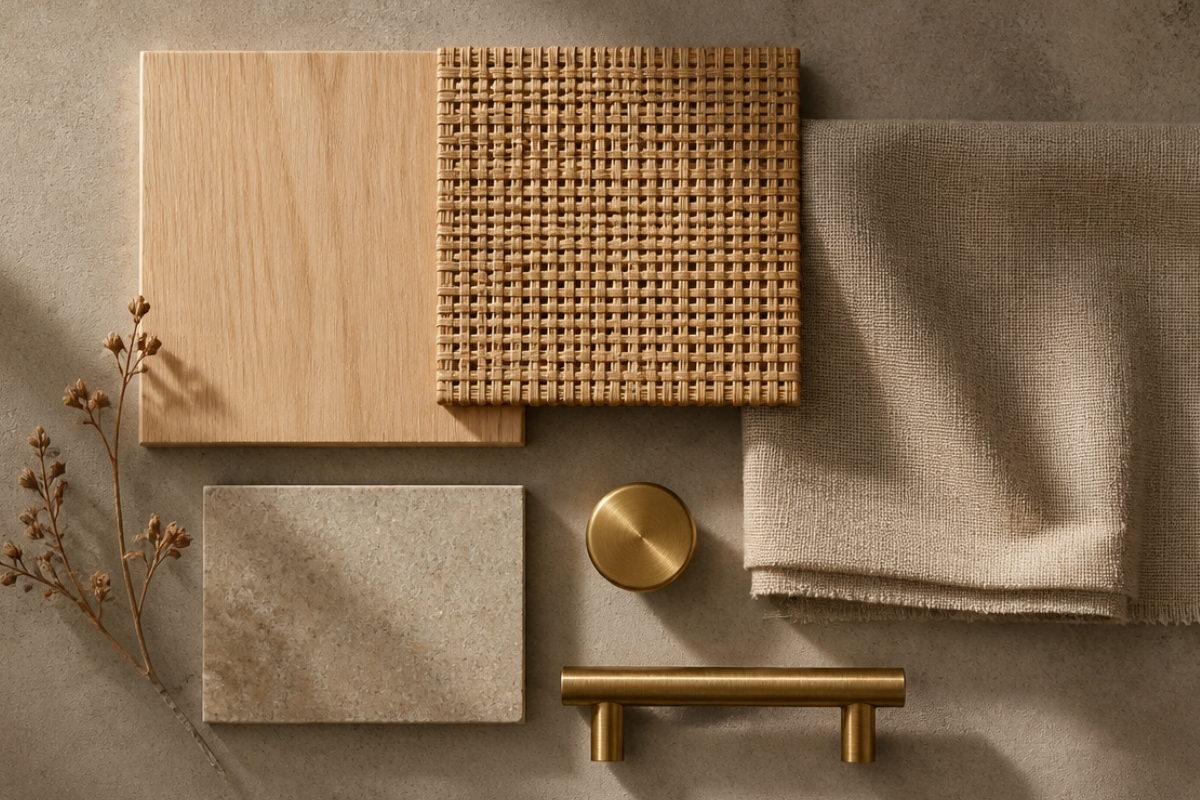
Japandi is a hybrid of two design philosophies that share more DNA than they appear to from the outside. Japanese wabi-sabi celebrates the beauty of imperfection, natural materials, and spaces that feel honest rather than polished. Scandinavian hygge prioritises warmth, comfort, and the kind of homeliness that makes a space feel genuinely lived in rather than curated for an audience.
The overlap between them is where Japandi lives. Neutral palettes grounded in warm earth tones. Natural materials that age visibly and well. Furniture with clean lines but not cold proportions. Spaces that feel calm without feeling empty.
What Japandi is not is a checklist. It is not white walls plus a wooden bench plus a single plant. Applying the surface elements of Japandi without understanding the underlying philosophy produces the beige flat problem mentioned above.

Why Singapore HDB Flats Are Actually Good Candidates
The compact proportions of Singapore HDB flats work in favour of Japandi rather than against it. The philosophy is fundamentally anti-excess. Every object in a Japandi space is either functional or deeply considered. In a 90 square metre four-room flat, this discipline is not just aesthetically desirable. It is practically necessary.
Japandi’s core principles of minimalism, natural materials, and thoughtful curation address practical needs while creating visual serenity that does not overwhelm small spaces. Singapore homeowners who have been trying to make maximalist interiors work in compact flats for years find that the Japandi constraint is actually a relief rather than a limitation.
The style also aligns well with how younger Singaporean households actually live. Hybrid working has made the home office a permanent fixture. Multi-generational arrangements mean spaces need to function across age groups. Japandi’s emphasis on flexible, multi-purpose spaces and furniture that earns its place fits these realities better than styles that were designed for larger Western homes.

Where Japandi Fails in Singapore: The Real Problems
Here is where most articles stop telling you the truth.
The humidity problem is serious. Japandi’s signature materials, solid timber floors, raw linen textiles, untreated wood furniture, and natural rattan, are all vulnerable to Singapore’s tropical humidity in ways that the Instagram version of Japandi does not acknowledge. The tropical heat and humidity in Singapore can pose significant challenges for interior design, especially when it comes to choosing suitable materials that can handle the moisture while maintaining the aesthetic. Solid timber flooring in a Singapore HDB without proper acclimatisation and moisture management will expand, contract, and gap over time. Untreated rattan in a humid kitchen area will deteriorate within two to three years. Natural linen curtains in a west-facing room will fade unevenly within a year.
None of this means Japandi cannot be done in Singapore. It means it needs to be specified correctly, which is a different skill set from making it look good in a render.
The storage problem is real. Japandi spaces are defined by clear surfaces and uncluttered sightlines. Singapore households accumulate things. Four-room HDB flats house families. Families have school bags, appliances, toys, CNY decorations, and a full set of wok lids. The Japandi principle of visible calm requires invisible storage, which means significantly more built-in carpentry than a typical minimalist renovation includes. Homeowners who budget for the Japandi aesthetic but not for the storage infrastructure that makes it sustainable end up with a beautiful flat for six months and a cluttered one for the next five years.
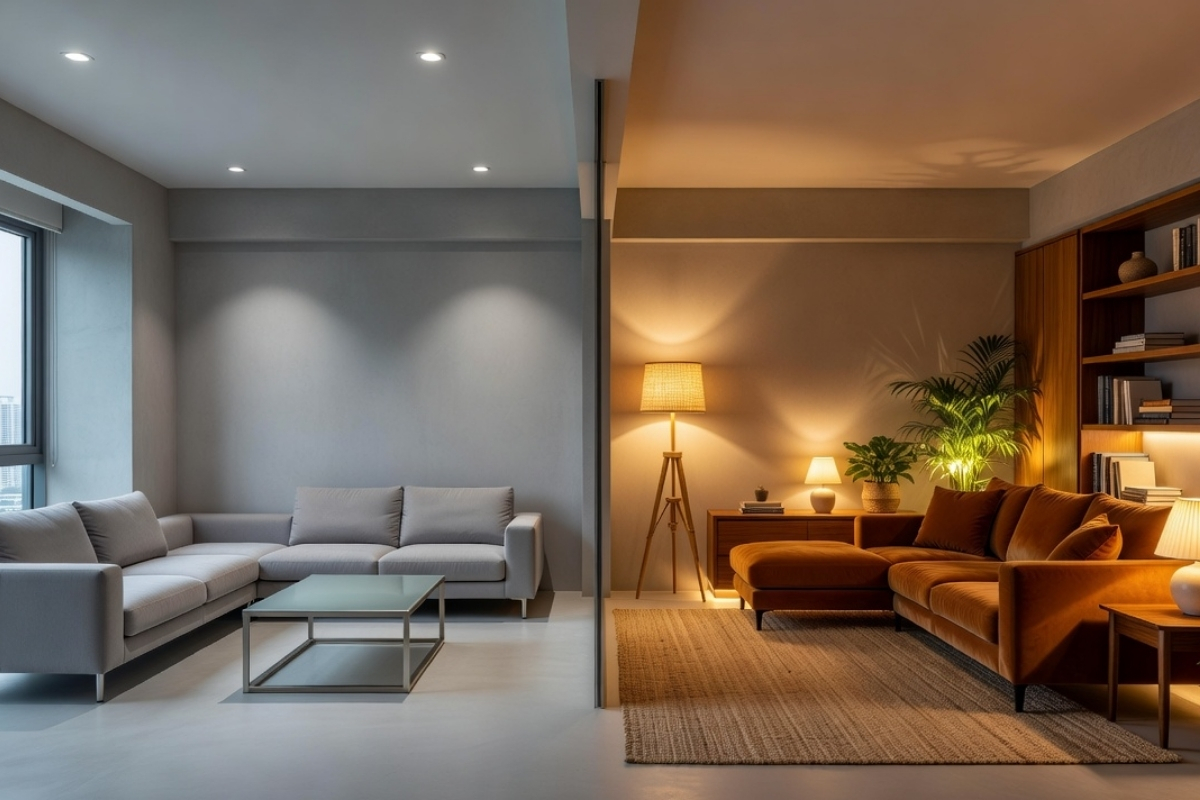
The lighting specification is almost always wrong. Japandi interiors depend fundamentally on warm, layered lighting at 2700K to 3000K colour temperature. Light-toned timber slat walls and fluted panels in ash, birch, or white oak provide a warm, textured backdrop that bridges the Japanese and Scandinavian material traditions. But these materials only read the way they should under warm light. Most Singapore renovation contractors install cool-white LED panels at 4000K or above because they are cheaper and easier. The result is a space where the warm timber tones look grey and the natural materials lose their character entirely. This single specification error undoes more Japandi renovations than any other factor.
Materials That Work and Materials That Do Not
Getting the material specification right is the most important technical decision in a Japandi renovation.
Engineered timber flooring in pale oak or ash tones performs significantly better than solid timber in Singapore’s climate. Luxury vinyl flooring in light wood tones offers a practical, dimensionally stable alternative for homeowners who want the Japandi foundation without the maintenance implications of real timber. Both options can be specified to look correct under warm lighting.
For wall treatments, limewash paint or Venetian plaster in warm off-white or greige tones gives Japandi its characteristic textured depth without the cost and application complexity of genuine plasterwork. These finishes also handle Singapore humidity better than flat emulsion on untreated walls.
Rattan, bamboo, and solid rubberwood bring warmth and texture while holding up well in moisture-prone conditions. These are the natural materials that genuinely perform in Singapore’s climate. Untreated pine furniture, raw linen upholstery, and unsealed stone surfaces do not.
For cabinetry, handleless designs in warm matte laminates, specifically laminates that are rated for high humidity environments, are the practical Japandi choice. The handleless profile gives the clean line Japandi requires. The correct laminate specification ensures it does not delaminate within three years.
The Room-by-Room Reality
Japandi reads differently across the rooms of a Singapore flat.
The living room is where it works best. A low-profile sofa in warm greige or taupe, a solid timber or rattan coffee table, a single feature wall in fluted timber or limewash paint, and warm layered lighting is a combination that is both achievable on a realistic HDB budget and genuinely effective in Singapore proportions.
The kitchen is the most challenging room for Japandi in a Singapore context. Singapore cooking habits involve high heat, strong odours, and significant grease. The open-plan kitchens that Japandi favours require serious ventilation investment to remain Japandi-looking after two years of actual use. A well-specified kitchen with proper exhaust capacity, easy-clean surface materials, and concealed appliance storage can hold the aesthetic. An under-specified kitchen with beautiful natural materials and inadequate ventilation will not.
Bedrooms are where Japandi delivers the clearest return. The philosophy of calm and considered space is exactly what a Singapore bedroom needs. Low bed frames, integrated bedhead storage, warm lighting, and blackout curtains in natural-looking fabrics are all achievable within a normal bedroom renovation budget.
The Design-Build Perspective
At Interea, our concern with any style brief is always the gap between how it looks and how it holds up. Japandi is a style that rewards correct specification and suffers visibly when it does not get it.
The difference between a Japandi renovation that looks as good in three years as it did on handover day and one that does not is not budget. It is material intelligence, storage planning, and lighting specification. These are decisions made before a single product is purchased, and they are the decisions that most renovation firms leave until too late in the process.
If you are planning a renovation and want to understand what Japandi actually requires to be done properly in a Singapore HDB or condo, speak to our residential team. We will give you a realistic brief before anything else.


